
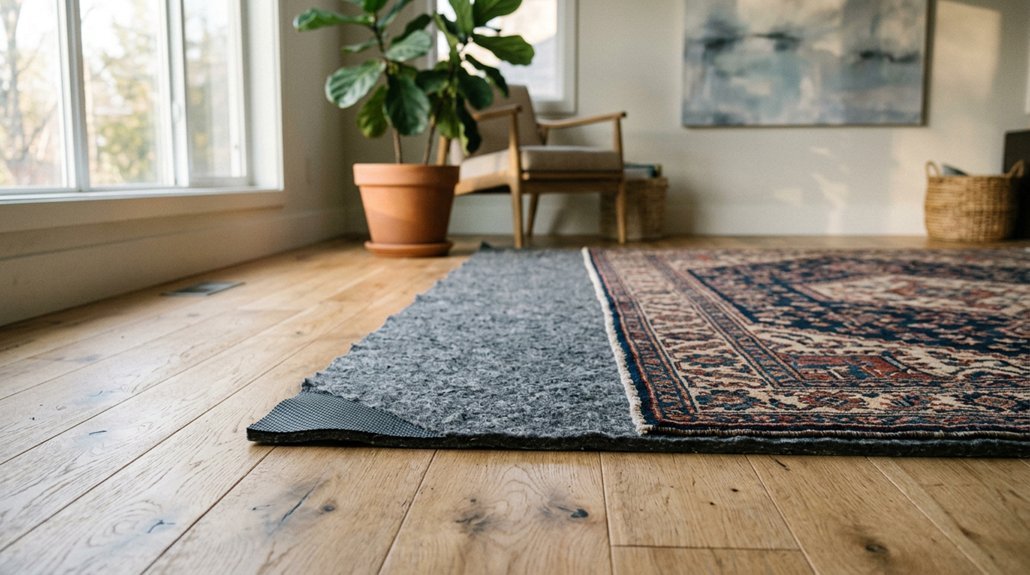


You might think a rug pad is an unnecessary extra purchase, but skipping one exposes your floors to scratches, your household to slips, and your rug to premature wear that shortens its lifespan by up to 40%. A rug pad is a dense underlayment, typically constructed from 100% felt, natural rubber, or a dual-layer composite containing 30% to 50% rubber content with felt backing, that anchors your rug while absorbing the impact of daily foot traffic across dimensions ranging from 2×3 feet for entryways to 9×12 feet or larger for living areas. The right pad delivers measurable benefits: felt options, usually 1/4-inch to 1/2-inch thick, provide plush cushioning and sound dampening; rubber varieties, often 1/8-inch thick with textured waffle or grid patterns, supply superior grip coefficients on hard surfaces; and hybrid felt-rubber pads combine both properties for high-traffic zones. Your floor type dictates material selection, since natural rubber can discolor certain hardwood finishes while PVC or synthetic latex alternatives work better on vinyl or tile. The payoff extends beyond immediate comfort, because a quality pad, which typically costs 10% to 20% of your rug’s price, preserves your flooring’s factory finish and prevents the abrasive friction that frays rug fibers from the bottom upward. Here’s what most buyers miss.
What Is a Rug Pad? (And When You Absolutely Need One)
Why exactly does your rug shift every time you walk across it, and what simple solution keeps it firmly in place while protecting your investment? You need a rug pad, a specialized underlayment that sits between your rug and floor to prevent slipping while delivering floor protection, cushioning, and a flat appearance.
A rug pad anchors your rug securely, eliminating dangerous movement and frustrating bunching that wears down fibers and creates tripping hazards. You’ll notice immediate cushioning underfoot, which reduces fatigue during prolonged standing while simultaneously absorbing impact that would otherwise damage both your rug’s backing and your floor’s finish. The pad’s protective barrier prevents scratches, stains, and dents caused by friction and compression.
Additionally, you’ll maintain a flat appearance because the pad prevents wrinkling, bunching, and edge curling that make rugs look neglected. It also promotes airflow between layers, making vacuuming more effective and reducing trapped dirt buildup.
Safety First: How Rug Pads Stop Slips and Falls
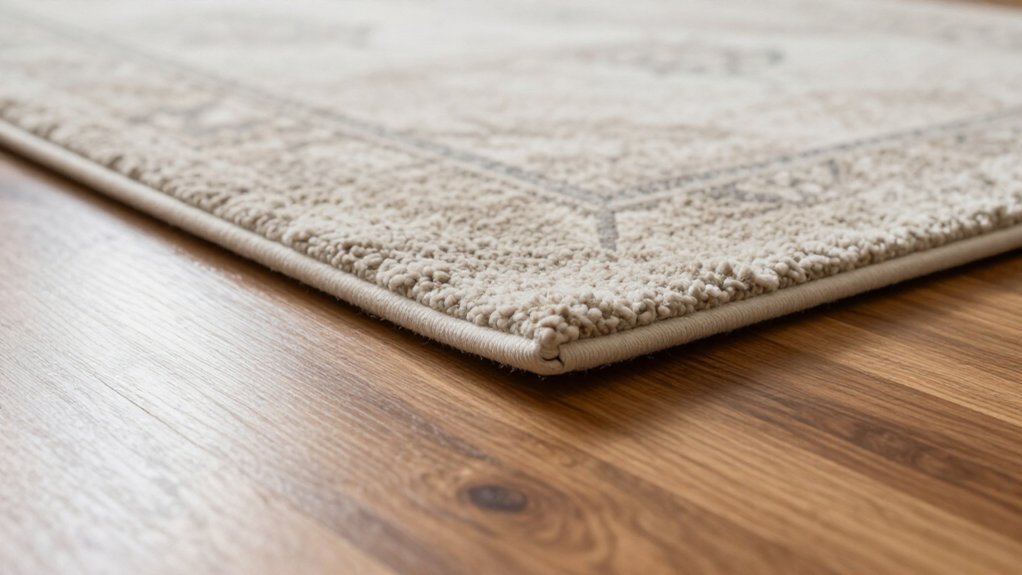
How often do you step onto a rug and feel it slide beneath your feet, sending a jolt of panic through your body as you struggle to regain balance? A quality rug pad eliminates this hazard by creating friction between your rug and hard floors, gripping both surfaces simultaneously to lock everything in place. On slick surfaces like tile, hardwood, laminate, or vinyl, where rugs slide most easily, pads with rubber bottoms and felt tops maintain steady contact with the floor while cushioning your rug above. This dual-layer construction, typically 1/4 to 3/8 inch thick, prevents the bunching and edge curling that cause trips and falls in high-traffic areas. For maximum security, you can add double-sided carpet tape to your pad, ensuring your rug stays exactly where you place it, protecting you from dangerous slips every day.
Recommended Products

Upgraded Cushioning and Grip: Unlike other pure felt pads, our pad has a durable natural rubber backing to increase gripping and durability. 1/8" thick felt forming a dense, cushioned surface, aims to make your rugs cozier and provide extra comfort underfoot, even the thinnest rugs can feel soft and comfortable. Dense fibers surface securely holds rugs in place without bunching, while offering noise reduction and insulation
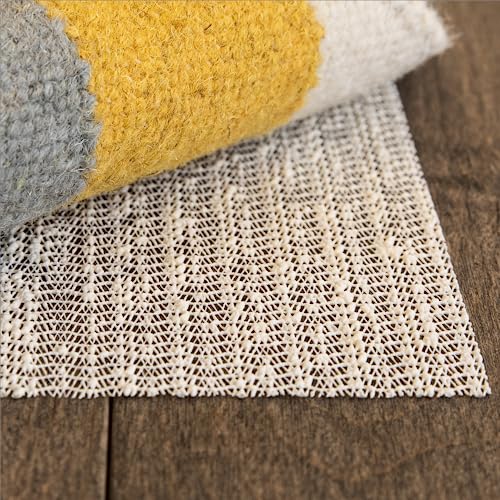
Grip-It RUG STOP NATURAL 3' x 5' is a high-quality low-profile non-slip rug pad to help keep area rugs from shifting, bunching, and sliding on hard-surface floors. Perfect for area rugs that do not require extra cushion.

Upgraded Cushioning and Grip: Unlike other pure felt pads, our pad has a durable natural rubber backing to increase gripping and durability. 1/4" thick felt forming a dense, cushioned surface, aims to make your rugs cozier and provide extra comfort underfoot, even the thinnest rugs can feel soft and comfortable. Dense fibers surface securely holds rugs in place without bunching, while offering noise reduction and insulation
Floor Protection: How Rug Pads Save Your Hardwood or Tile
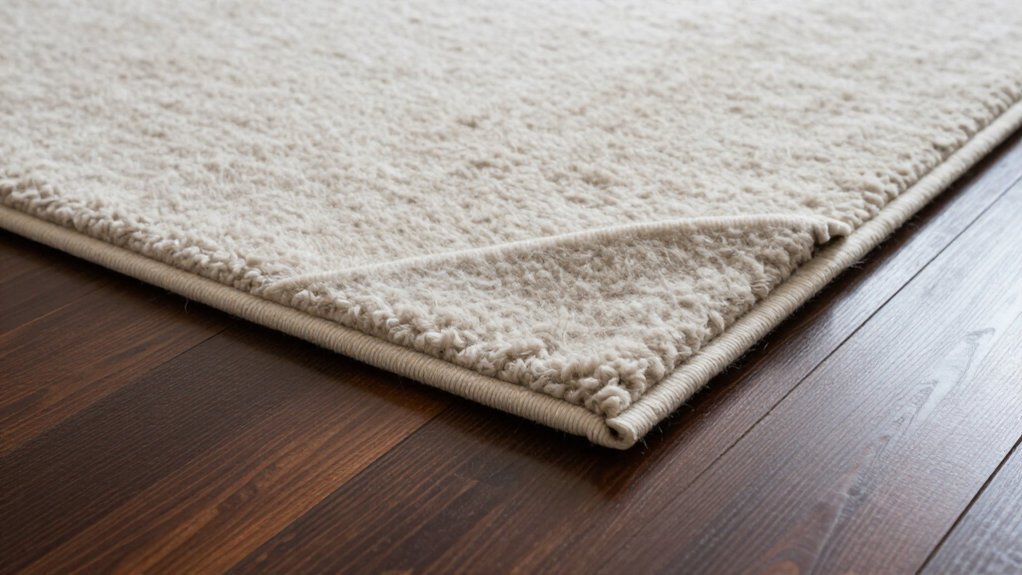
When you’re investing in quality hardwood or tile flooring, you’ll want a rug pad that acts as a protective buffer, since the felt-and-rubber construction, typically 1/4 inch thick with a 100% natural rubber backing that grips without adhesive residue, prevents the fine scratches and surface abrasions caused by dirt particles grinding between your rug and floor under daily foot traffic. A dense felt layer, often measuring 32 to 45 ounces per square yard, absorbs impact from furniture legs and footfall while blocking spills and pet accidents from reaching your floor’s finish, which means you’re not just preventing visible wear but also avoiding the costly refinishing, typically $3 to $8 per square foot, that untreated floors require every few years. By selecting a pad with adequate density, measured in ounces per square yard, and proper thickness, usually 1/8 to 3/8 inch depending on rug size and traffic level, you’re effectively extending your floor’s lifespan while maintaining the aesthetic integrity that made you choose hardwood or tile in the first place.
Recommended Products

STRONG GRIPPING POWER - The natural rubber backing keeps rugs anchored firmly in place while the heat-pressed felt layer grips your rug, preventing slipping, sliding, and wrinkling in high-traffic areas.

NON-SLIP GRIP FOR SAFETY: Durable latex rubber backing prevents slipping, sliding, bunching, and wrinkles on hardwood, tile, carpet, or any floor—superior hold compared to basic foam pads for everyday use.

Strong gripping power - natural rubber backing keeps rugs anchored firmly in place; prevents slipping, sliding, and wrinkling in high-traffic areas.
Scratch Prevention Benefits
Where exactly does the damage start when your rug slides across hardwood or tile? It begins with microscopic friction, and you’ll see it accumulate fast. A quality rug pad delivers essential floor protection by anchoring your rug firmly in place, which eliminates the back-and-forth abrasion that destroys delicate finishes. This scratch prevention works because rubber-based pads, typically constructed with 100% natural or recycled rubber cores measuring 1/8 to 1/4 inch thick, grip both floor and rug simultaneously. The cushioning layer absorbs impact from foot traffic while halting rug movement that drags embedded grit across your surface. You’ll preserve your investment because the pad creates a protective barrier, reducing the friction coefficient between materials and stopping the repeated scuffing that permanently mars hardwood or tile.
Stain and Wear Shielding
Beyond guarding against scratches, a rug pad serves as your floor’s first line of defense against stains and gradual wear that shorten the lifespan of hardwood, tile, laminate, or stone surfaces. You create a protective barrier that buffers friction, absorbs impact, and stabilizes your rug to prevent the scuffing and surface damage caused by constant movement. This floor protection extends beyond simple cushioning: quality pads with felt-rubber blends, typically 1/4-inch thick and available in standard sizes from 2×3 feet to 9×12 feet, deliver wear protection through dense fiber construction that traps dirt and debris before it reaches your floor’s finish.
- Your rug pad provides stain prevention by blocking spills and soil from penetrating to sealed surfaces
- Slip resistance from natural rubber backing, comprising 30-40% of composite pads, anchors rugs securely to prevent abrasive shifting
- Air-flow channels in open-weave designs reduce moisture buildup that degrades floor finishes over time
- Indent prevention through even weight distribution protects against permanent compression marks from furniture legs
Rug Longevity: Why Your Rug Wears Out Faster Without a Pad
Why does your expensive area rug look tired after just a few years when it should last decades? You’re witnessing accelerated aging that a quality rug pad prevents. Without floor protection, your rug skates across hard surfaces, accumulating dirt and friction that grind down delicate fibers, especially in hand-knotted or finer constructions where every knot represents hours of craftsmanship. You create unnecessary wear each time you walk across an unsecured rug, as constant movement causes bottom abrasion and repeated rubbing against floor particles. A rug pad cushions this movement, reducing friction between rug and floor while stabilizing the entire piece to prevent wrinkling, bunching, and edging curls that develop into permanent wear patterns. You extend rug longevity significantly when you eliminate shifting, because stabilized rugs minimize the mechanical stress that breaks down fibers prematurely.
Comfort Upgrade: Extra Cushioning From Your Rug Pad
You’ll notice an immediate difference in underfoot comfort when you add a rug pad, as these accessories create a cushioned walking surface that transforms hard flooring into a more forgiving, padded area under your feet. Premier options, which typically measure about 1/4 inch in thickness, deliver noticeable softness without visibly raising your rug or altering its appearance, while thicker pads exceeding 1/2 inch maximize plushness though you’ll need to verify clearance near doors and furniture to prevent interference. For targeted comfort, you can select from specialized materials such as memory foam, which provides a luxurious, body-conforming plush feel, or felt-plus-rubber blends, which balance softness with reliable grip, and these cushioning upgrades prove especially valuable in high-traffic zones where they reduce underfoot hardness while maintaining the stability you need for safe, everyday use.
Recommended Products

THE ORIGINAL EXTRA STRONG GRIPPER: our trusted Gorilla Grip nonadhesive rug pads offer a unique, dual sided grip that firmly holds onto both the rug pad and your hard floor to help prevent rug movement
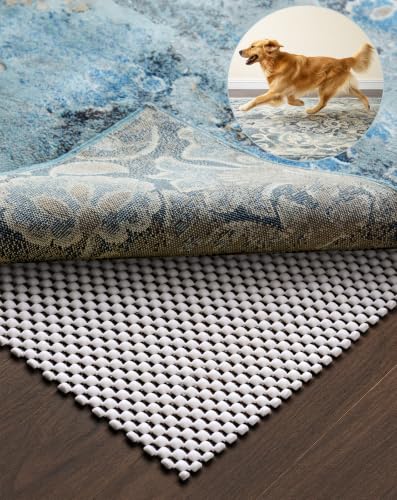
Non-slip Protection: Our pad's signature grip keeps rugs securely in place, preventing bunching and sliding during daily use. It also protects your floors from wear and tear, including damage from high heels, children at play, and more.
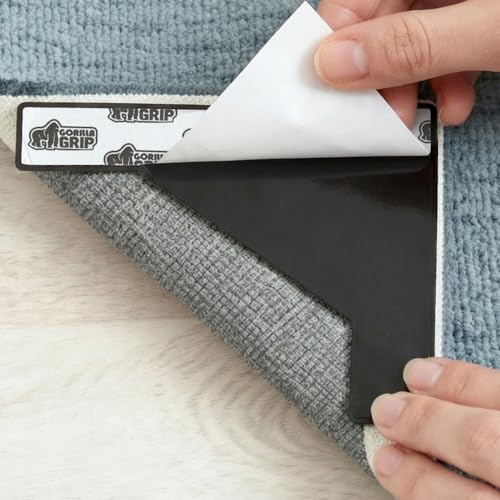
EXTRA WIDE DUAL SIDED GRIP FOR MAXIMUM HOLD: powerful dual-sided backing grips both your rug and floor for a strong, reliable hold; each rug gripper covers 5 sq. inches of flooring and covers more rug area than most standard rug grippers; helps prevent shifting and bunching on floors
Thicker Pads, Softer Steps
How much more comfortable could your morning routine feel with a noticeably softer surface underfoot? You gain substantial underfoot cushioning when you choose thicker pads, such as the Premier Pad, which delivers approximately 1/4 inch of dense material between your rug and the floor. This added rug pad layer transforms hard surfaces into noticeably plush walking areas, directly reducing foot fatigue in hallways, kitchens, and other high-traffic zones where you stand or pace repeatedly. You also achieve a smoother rug surface, since thick padding presses upward to minimize wrinkles, bunching, and uneven wear that otherwise distort your rug’s appearance over time. Before you purchase, verify adequate clearance for doors and furniture legs, as thicker profiles raise overall height.
- You absorb impact through 1/4 inch of material, sparing joints during prolonged standing.
- You extend rug lifespan by preventing abrasive friction against bare flooring.
- You create uniform tension that resists dimensional distortion across large area rugs.
- You balance plushness with practical spatial constraints in your home.
Memory Foam Comfort
Where exactly does your foot land when you step onto a rug, and what happens to that pressure in the milliseconds that follow? A memory foam rug pad absorbs that impact, transforming sharp pressure into dispersed comfort through dense, responsive cushioning that cradles each step. You’ll notice immediate plushness underfoot, particularly during extended standing or walking across larger area rugs where maximum comfort outweighs grip requirements. Memory foam prioritizes this luxurious feel over slip resistance, so you’ll want to anchor it with furniture weight or pair it with rubberized backing when floor protection demands higher traction on slick hardwood or tile. Available in thicknesses from one-quarter to one-half inch, these indoor pads suit various floor types, though you should combine them with grippier materials if your household needs reliable, non-slip stability alongside that cloud-like softness.
Felt Cushioning Benefits
While memory foam specializes in instant softness underfoot, felt rug pads take a different approach to cushioning, using dense, compressed wool fibers that provide substantial padding without the quick-sinking sensation of foam. When you choose a 100% felt rug pad, you gain meaningful floor protection alongside reliable comfort, as the compressed wool structure absorbs impact and dampens sound across your living space. Felt cushioning also extends your rug’s lifespan by reducing fiber compression and preventing heavy furniture from leaving permanent indentations or scratches on preserved floor finishes.
- You feel enhanced warmth and softness walking across your rug, since felt’s thermal properties add perceived coziness without visible height changes.
- You protect hardwood, tile, or laminate surfaces from abrasive backing contact and grinding debris.
- You reduce ambient noise transmission between floors, particularly beneficial in multi-level homes.
- You maintain rug positioning in low-traffic spaces where extreme grip matters less than pure cushioning comfort.
The Right Rug Pad for Every Floor Type
Every floor type in your home demands a specific rug pad formulation, and choosing the wrong match can leave you with scratched hardwood, stained stone, or a rug that slides dangerously across tile. You need a rug pad that delivers grip, protection, and anti-slip performance tailored to your exact floor type, whether that surface is hardwood, laminate, stone, tile, carpet, or bamboo.
For stone and tile floors, you should select pads that anchor your rug firmly to prevent dangerous movement under foot traffic while guarding against wear. On hardwood and laminate, you’ll want pads that protect finishes and extend rug life by minimizing bottom abrasion. Materials matter: rubber provides superior grip, felt offers cushioning and protection, and felt-rubber blends deliver versatile performance across multiple surfaces, cushioning floors and reducing scratches, stains, wrinkles, and shifting.
Recommended Products

PLUSH FELT CUSHION: Choose from three thickness options - 1/4", 3/8”, and 1/2" - offering various levels of a soft feel underfoot, sound absorption, insulation, and extra comfort for your area rugs in busy spaces.
NON-SLIP GRIP FOR SAFETY: Durable latex rubber backing prevents slipping, sliding, bunching, and wrinkles on hardwood, tile, carpet, or any floor—superior hold compared to basic foam pads for everyday use.

NOT NON-SLIP - This pad is meant for use with rugs anchored by furniture or heavy rugs that stay in place on their own. For non-slip applications, try one of our felt and rubber options.
