5 Steps to Install Can Lights in Ceiling Tiles
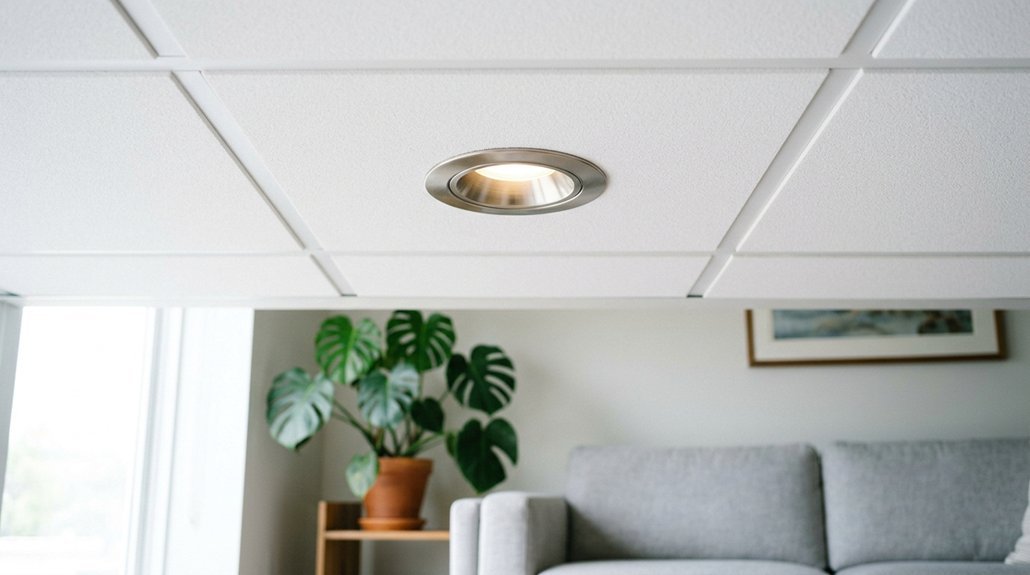
five steps for recessed ceiling lights

The ceiling grid is your canvas, and the right fixture is the brushstroke that changes shadow into light. You’re standing at the threshold of a project where precision matters: 2×2 or 2×4 tile dimensions, 15–25 pound load ratings, and canless LED downlights with steel mounting arms that clamp directly to T-bars without additional support.

You’ll need to verify your drop ceiling’s structural capacity, map a layout that aligns with grid lines, and install hanger wires with support bars before cutting openings that center perfectly over each housing. The wiring demands a licensed electrician, but the payoff, flush-mounted trims, code-compliant inspection, and even illumination, awaits those who follow the steps.
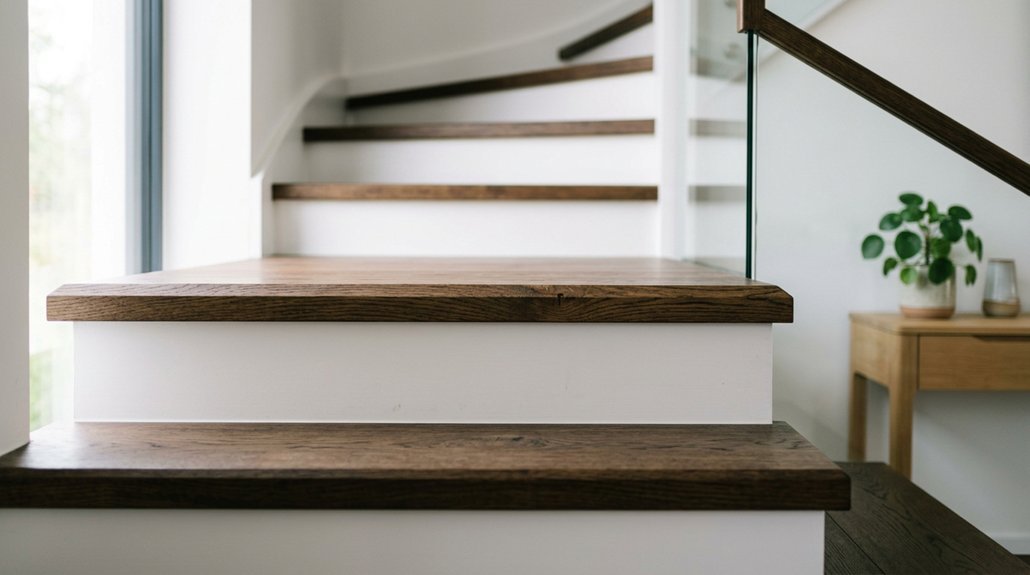
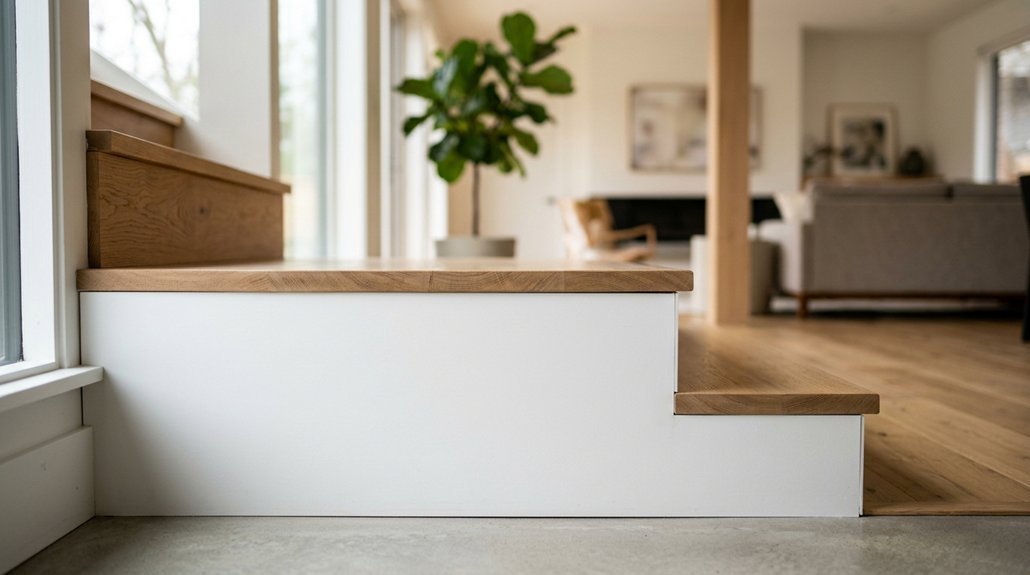
What Is a Stair Tread?

definition of a stair tread

You place your foot on a solid oak surface, feeling the grain beneath your shoe as you ascend to the next level. That horizontal plank, typically measuring 10 to 11.5 inches in depth and 1 to 1.25 inches thick, is your stair tread: the load-bearing component that supports your full weight while the vertical riser hides the structural gap behind it.

Whether you’re selecting prefinished White Oak with a 3/4-inch bullnose overhang or unfinished Red Oak requiring on-site staining, you’ll need to match your existing flooring’s thickness, which usually ranges from 3/4 inch to 1 1/16 inch for standard installations. The choice between traditional full-length treads or retro caps that overlay existing steps depends on your staircase’s current condition and your budget, with returns adding 1 to 1.5 inches of finished edge on open sides.

Code requirements mandate minimum 10-inch tread depth and maximum 7.75-inch riser height for residential applications, so you’ll want to measure carefully before ordering custom lengths that can exceed 48 inches for grand staircases. Your safety, your home’s value, and your daily comfort all rest on this single decision.

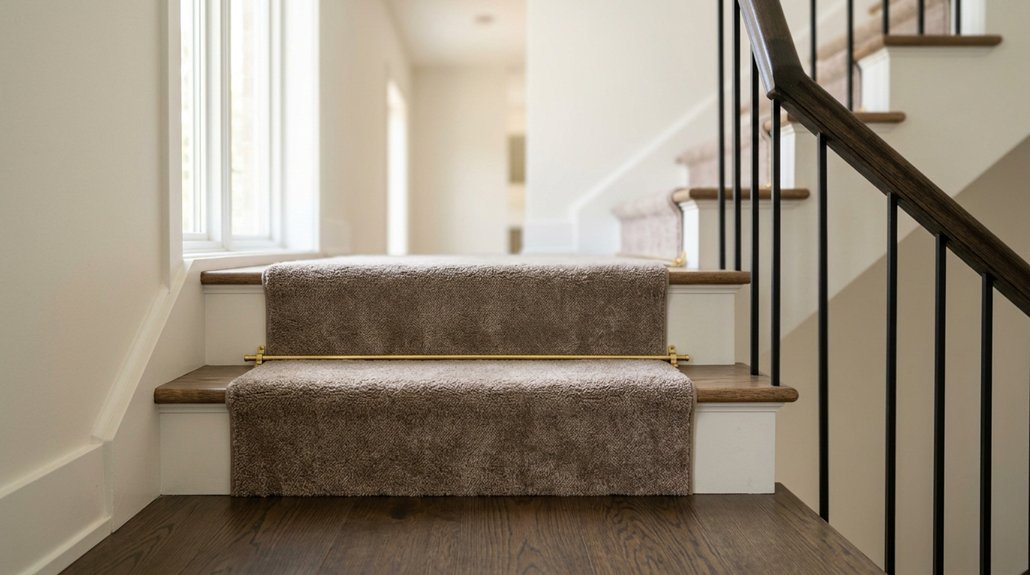
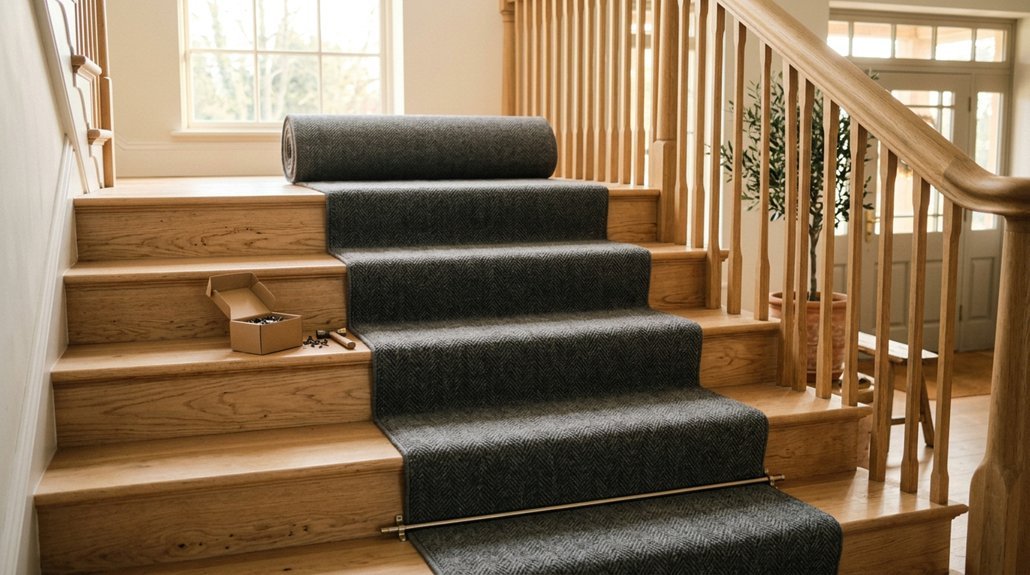
How to Fit a Stair Runner in 7 Simple Steps

how to install a runner

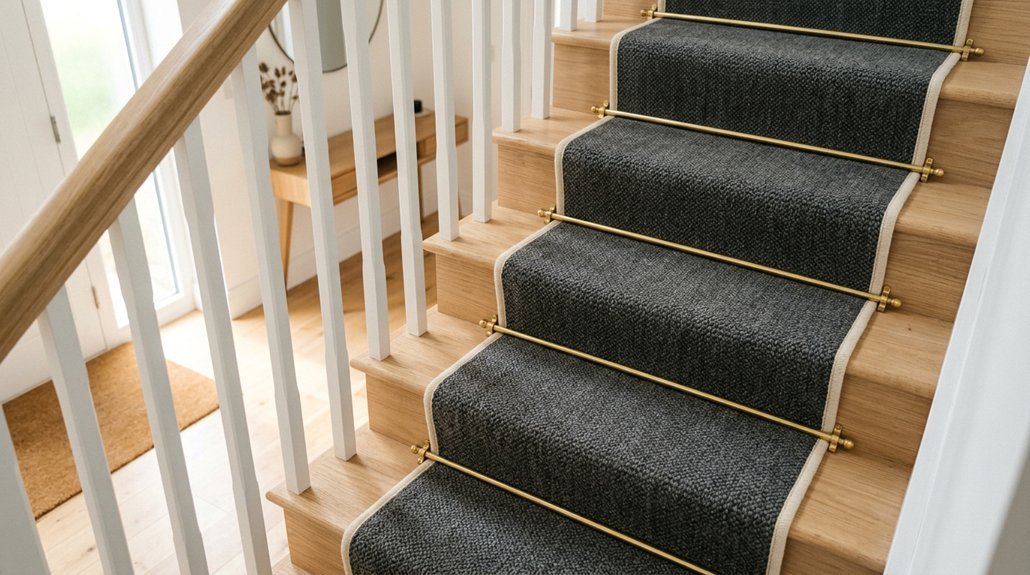
Most homeowners underestimate how much a properly fitted stair runner extends a staircase’s lifespan, as the 80/20 wool-nylon blend, measuring 27 or 32 inches wide, absorbs up to 70% more impact than bare treads while preventing wear on hardwood surfaces that refinishing would otherwise cost $2,000 to $5,000 to restore.

You’ll need to account for the bullnose, that rounded edge where tread meets riser, which typically adds 1 to 1.5 inches per step to your total length calculation, and you’ll want a 100% recycled felt pad, cut 0.5 inches narrower than your runner to prevent visible edges, which provides the density, rated at 32 ounces per square yard, that prevents premature carpet compression.

The process demands carpet tape with a tensile strength of 25 pounds per inch, applied in a three-point pattern on each tread, though the real challenge lies in maintaining consistent margins, typically 3 to 5 inches on each side, as you work from top to bottom with a bolster chisel, a curved tool that tucks fabric into the crevice between tread and riser.

What most guides won’t tell you is how the staple pattern, specifically one staple every 3 inches along the riser and two per tread beneath the bullnose, determines whether your runner develops the rippling that sends 40% of DIY installations to professionals for correction within 18 months.

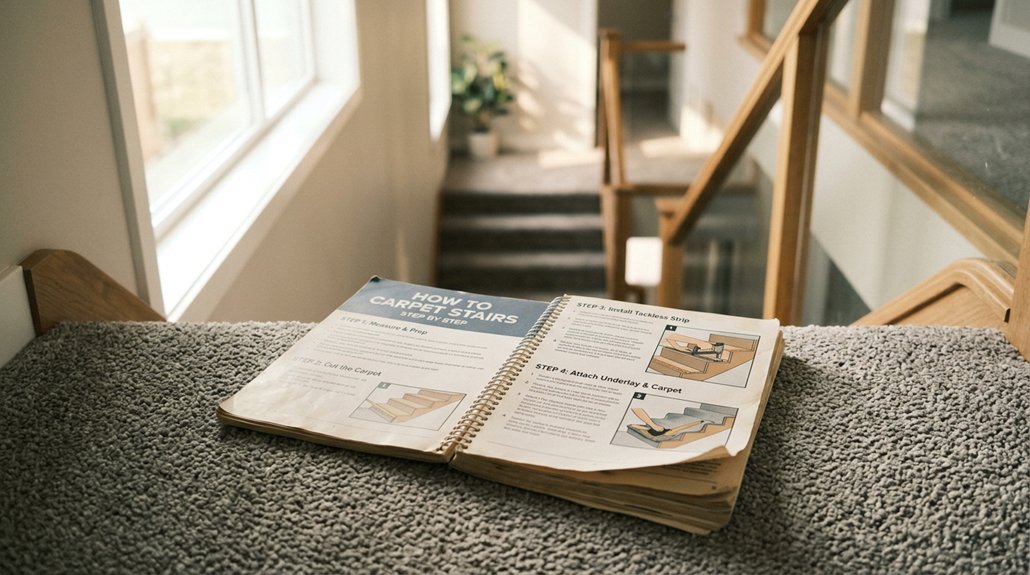
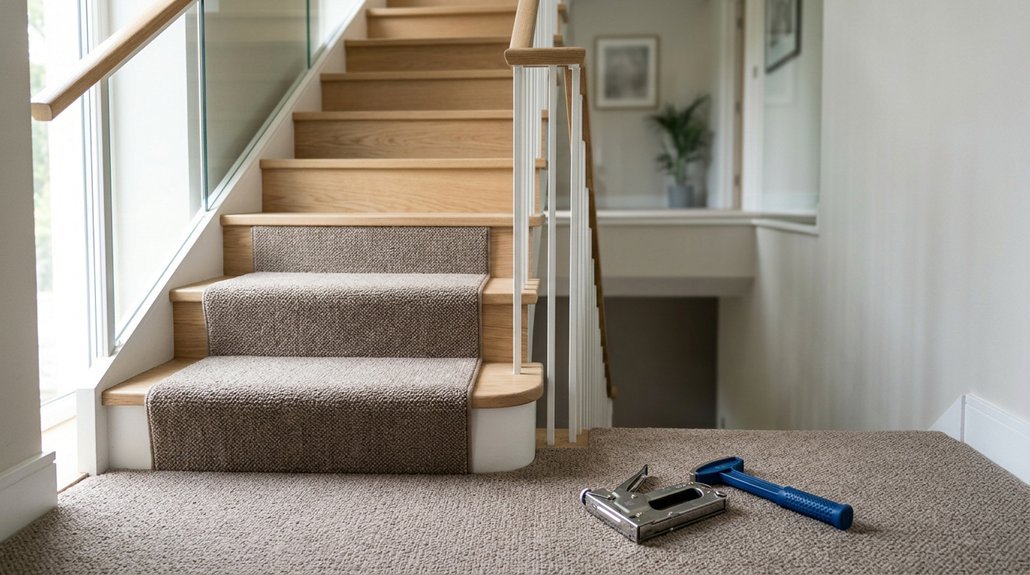
How to Carpet Stairs Step by Step

carpet stairs step by step guide

Like Theseus navigating the labyrinth, you’ll need the right thread to guide your way up those stairs. You’ll measure each tread and riser with a 25-foot tape measure, adding 3 to 4 inches for tucking, then select a 100% nylon or 80/20 wool-nylon blend carpet with a density of 2,000 to 2,500 twists per square inch for durability. Your knee kicker, 4-inch tack strips, and half-inch corrosion-resistant staples await; the real challenge begins when you discover which padding thickness, 3/8-inch or 7/16-inch rebond, changes a slippery installation into a staircase you’ll trust for decades.

What Is a Stair Riser?

what is a stair riser

You stand at the bottom of a staircase, your eyes tracing the vertical face of each step, that solid panel rising from tread to tread, and you are looking at a stair riser, the structural element that defines your climb, supports your weight, and keeps your foot from slipping through.

Yet you might not know that this single component, typically measuring 7 inches in height with a maximum 3/8-inch variation permitted by most building codes, can be made from solid oak, engineered MDF, poured concrete, or extruded aluminum. Each material offers distinct lifespans, maintenance demands, and price points that will shape your decision before you ever set foot on the first step.

10 Steps to Install Carpet on Stairs

steps to install carpet on stairs

You can reduce stair-related falls by up to 90% with properly installed carpet, yet most homeowners hesitate to tackle this project themselves. You’re about to discover that installing stair carpet requires only basic tools, a single weekend, and roughly $200 to $600 depending on whether you select a 100% nylon runner, a 50/50 wool-synthetic blend with 32 ounce face weight, or a full-coverage broadloom in 12-foot widths.

The process demands patience, knee protection, and a rental power stretcher, but you’ll save approximately $1,500 in professional labor costs while achieving custom results. What separates a trip hazard from a durable, code-compliant installation comes down to ten specific steps that balance material science, precise measurements, and tension mechanics.

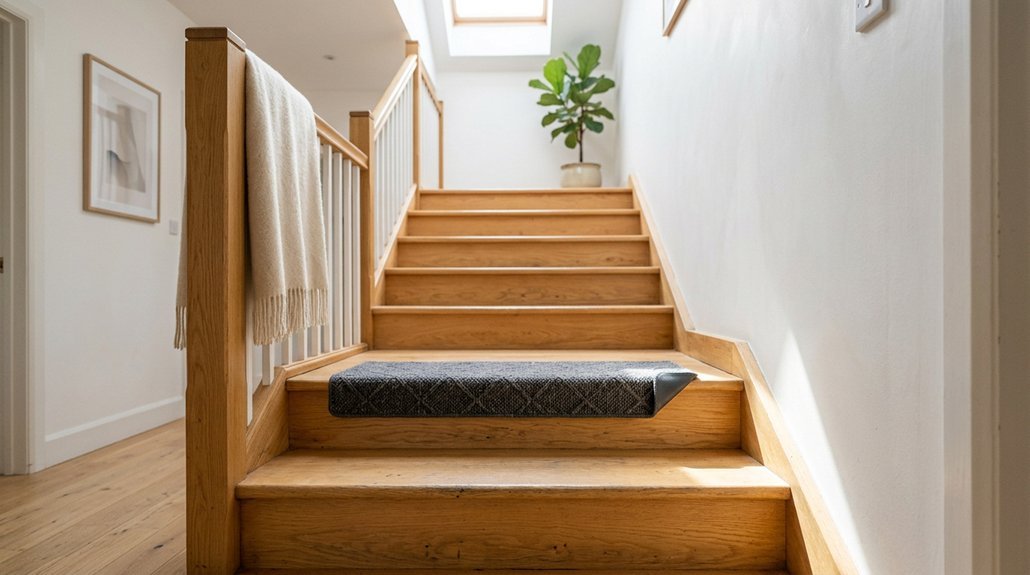
How to Install a Stair Runner in 3 Easy Steps

stair runner installation steps

You might be surprised to learn that a professionally installed stair runner, which can cost upwards of $800 in labor alone, is something you can tackle yourself with basic tools and a free afternoon. When you choose a runner with a durable 80/20 wool-nylon blend, measuring 27 to 32 inches in width to complement standard 36-inch treads, you’re investing in a product that withstands 10,000+ foot traffic cycles while dampening noise by up to 50%.

The real challenge isn’t the stapling; it’s the planning.

How to Put Carpet on Stairs in 10 Steps for a Perfect Fit

carpet stairs with precision fit

You need carpet that won’t shift underfoot, which means choosing between waterfall installation, where the runner flows continuously over each step’s nose, or cap-and-band style, which wraps individual treads and risers separately for a tailored look that holds up in high-traffic areas exceeding 100 daily trips.

Your first move is measuring every tread’s depth, typically 10 to 11 inches, and each riser’s height, usually 7 to 8 inches, then adding a 6-inch waste allowance per step and accounting for seam placement every 12 to 15 feet of runner length.

The right pad, such as 3/8-inch rebond foam with 6- to 8-pound density, taped with double-sided acrylic adhesive rated for 5-year minimum hold, determines whether your installation lasts 5 years or 15.

What most guides skip is the critical tension sequence that separates professional results from callbacks.

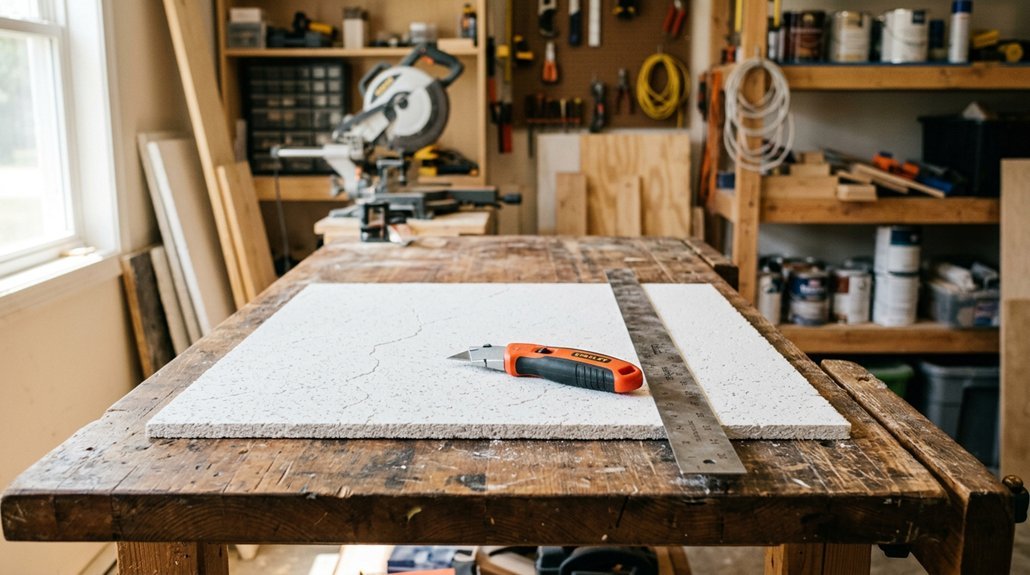
How to Cut Drop Ceiling Tiles in 5 Easy Steps

cutting drop ceiling tiles efficiently

Like Michelangelo releasing a figure from marble, you will discover that precise ceiling tile cutting demands the right tools and measured technique rather than force. Your project success hinges on understanding how 1/2-inch tolerances interact with grid systems, which utility knife blade angles prevent crumbling, and why that tapered reveal edge matters for professional results.

The method reveals itself in five deliberate steps that change raw mineral fiber, typically 3/4-inch thick with 2-by-4-foot or 2-by-2-foot standard dimensions, into seamless ceiling components. You will need specific guidance on scoring depth, cross-T alignment, and test-fit adjustments that separate amateur gaps from contractor-grade installations. The complete process awaits your attention, delivering measurable outcomes with tools you likely already own.

hometrendstudio.com
Privacy Overview

This website uses cookies so that we can provide you with the best user experience possible. Cookie information is stored in your browser and performs functions such as recognising you when you return to our website and helping our team to understand which sections of the website you find most interesting and useful.