
What Is a Stair Tread?
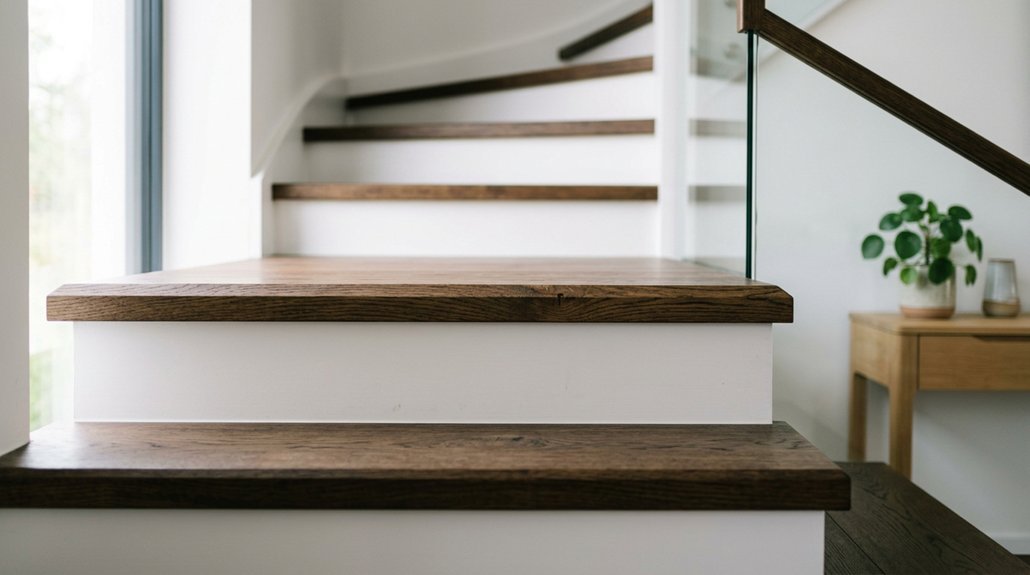
You place your foot on a solid oak surface, feeling the grain beneath your shoe as you ascend to the next level. That horizontal plank, typically measuring 10 to 11.5 inches in depth and 1 to 1.25 inches thick, is your stair tread: the load-bearing component that supports your full weight while the vertical riser hides the structural gap behind it.
Whether you’re selecting prefinished White Oak with a 3/4-inch bullnose overhang or unfinished Red Oak requiring on-site staining, you’ll need to match your existing flooring’s thickness, which usually ranges from 3/4 inch to 1 1/16 inch for standard installations. The choice between traditional full-length treads or retro caps that overlay existing steps depends on your staircase’s current condition and your budget, with returns adding 1 to 1.5 inches of finished edge on open sides.
Code requirements mandate minimum 10-inch tread depth and maximum 7.75-inch riser height for residential applications, so you’ll want to measure carefully before ordering custom lengths that can exceed 48 inches for grand staircases. Your safety, your home’s value, and your daily comfort all rest on this single decision.