
How to Fit a Stair Runner in 7 Simple Steps
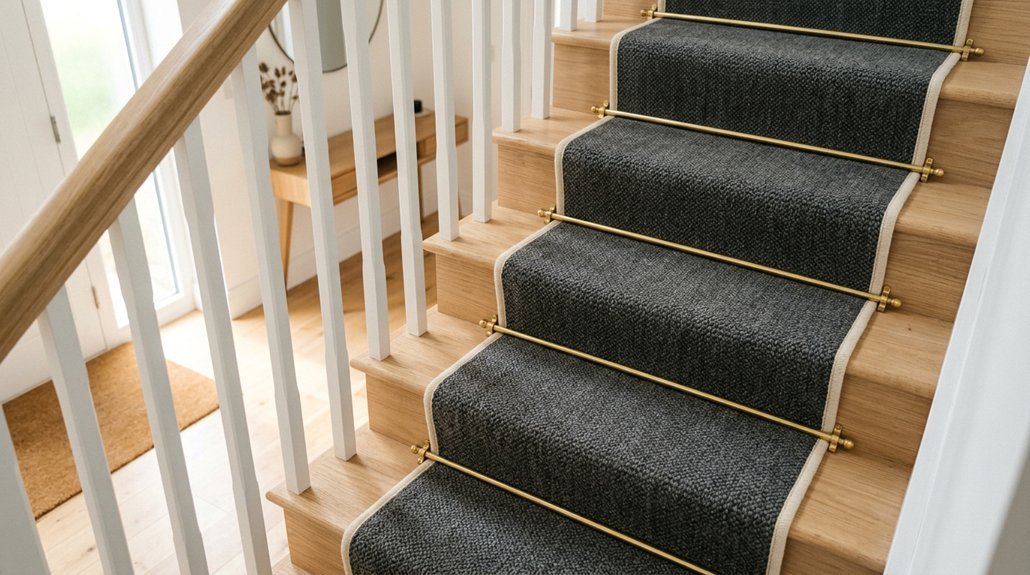
how to install a runner

Most homeowners underestimate how much a properly fitted stair runner extends a staircase’s lifespan, as the 80/20 wool-nylon blend, measuring 27 or 32 inches wide, absorbs up to 70% more impact than bare treads while preventing wear on hardwood surfaces that refinishing would otherwise cost $2,000 to $5,000 to restore.

You’ll need to account for the bullnose, that rounded edge where tread meets riser, which typically adds 1 to 1.5 inches per step to your total length calculation, and you’ll want a 100% recycled felt pad, cut 0.5 inches narrower than your runner to prevent visible edges, which provides the density, rated at 32 ounces per square yard, that prevents premature carpet compression.

The process demands carpet tape with a tensile strength of 25 pounds per inch, applied in a three-point pattern on each tread, though the real challenge lies in maintaining consistent margins, typically 3 to 5 inches on each side, as you work from top to bottom with a bolster chisel, a curved tool that tucks fabric into the crevice between tread and riser.

What most guides won’t tell you is how the staple pattern, specifically one staple every 3 inches along the riser and two per tread beneath the bullnose, determines whether your runner develops the rippling that sends 40% of DIY installations to professionals for correction within 18 months.
How to Install a Stair Runner in 3 Easy Steps

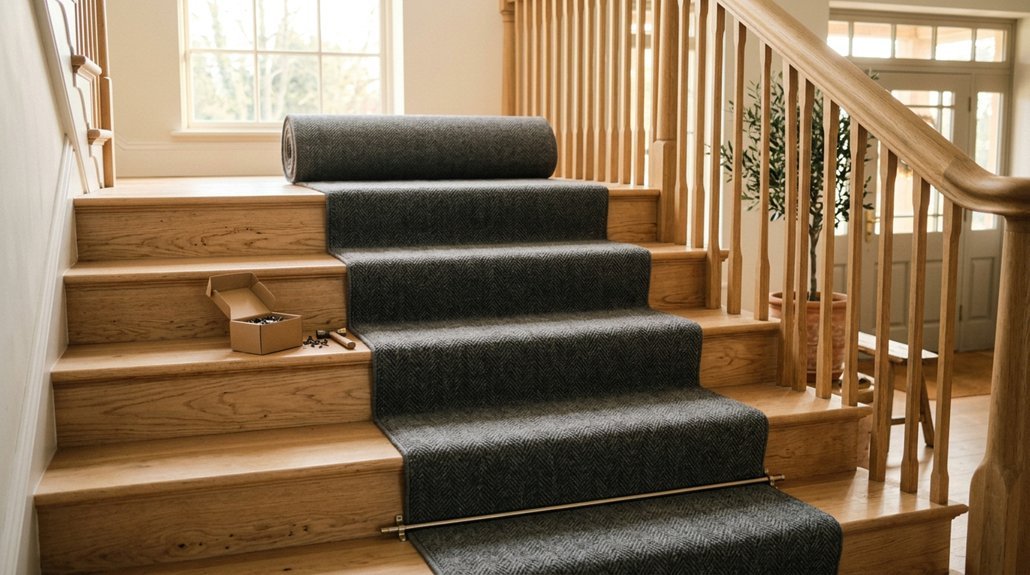
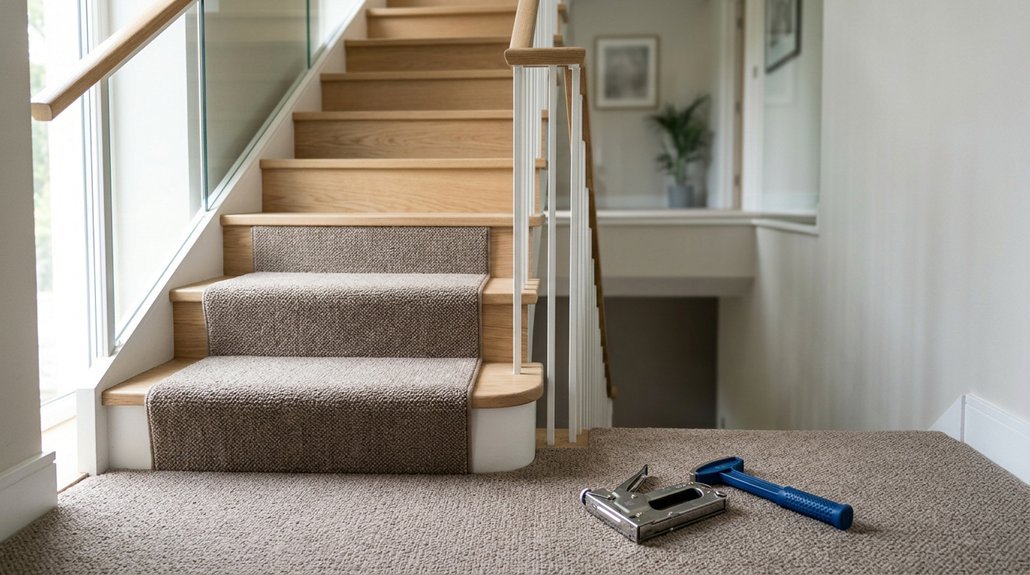
stair runner installation steps

You might be surprised to learn that a professionally installed stair runner, which can cost upwards of $800 in labor alone, is something you can tackle yourself with basic tools and a free afternoon. When you choose a runner with a durable 80/20 wool-nylon blend, measuring 27 to 32 inches in width to complement standard 36-inch treads, you’re investing in a product that withstands 10,000+ foot traffic cycles while dampening noise by up to 50%.

The real challenge isn’t the stapling; it’s the planning.

How to Put Carpet on Stairs in 10 Steps for a Perfect Fit

carpet stairs with precision fit

You need carpet that won’t shift underfoot, which means choosing between waterfall installation, where the runner flows continuously over each step’s nose, or cap-and-band style, which wraps individual treads and risers separately for a tailored look that holds up in high-traffic areas exceeding 100 daily trips.

Your first move is measuring every tread’s depth, typically 10 to 11 inches, and each riser’s height, usually 7 to 8 inches, then adding a 6-inch waste allowance per step and accounting for seam placement every 12 to 15 feet of runner length.

The right pad, such as 3/8-inch rebond foam with 6- to 8-pound density, taped with double-sided acrylic adhesive rated for 5-year minimum hold, determines whether your installation lasts 5 years or 15.

What most guides skip is the critical tension sequence that separates professional results from callbacks.

hometrendstudio.com
Privacy Overview

This website uses cookies so that we can provide you with the best user experience possible. Cookie information is stored in your browser and performs functions such as recognising you when you return to our website and helping our team to understand which sections of the website you find most interesting and useful.