
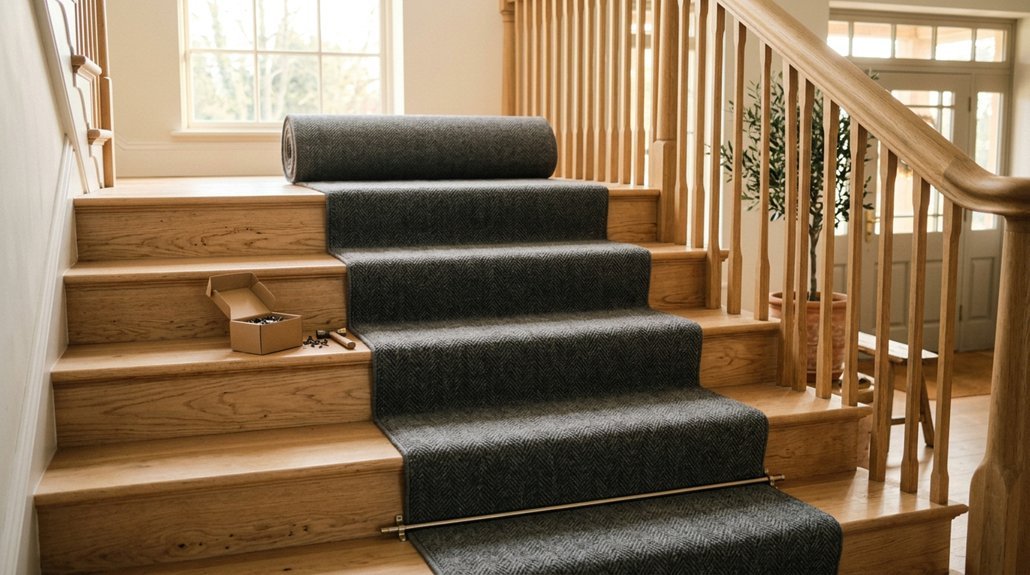


You might be surprised to learn that a professionally installed stair runner, which can cost upwards of $800 in labor alone, is something you can tackle yourself with basic tools and a free afternoon. When you choose a runner with a durable 80/20 wool-nylon blend, measuring 27 to 32 inches in width to complement standard 36-inch treads, you’re investing in a product that withstands 10,000+ foot traffic cycles while dampening noise by up to 50%. The real challenge isn’t the stapling; it’s the planning.
Pick Your Stair Runner and Plan the Layout
How do you choose a stair runner that fits both your staircase and your style? You’ll start by matching your runner width to your staircase width, so a 39.75-inch stair width pairs well with a 30-inch stair runner that leaves balanced side exposure for a clean stripe alignment. Next, you’ll plan the layout by measuring your tread depth, riser height, and total runners length, which lets you calculate exact coverage for about 16 stairs using four 2’6″ x 7’6″ runners. You’ll prioritize vertical stripe alignment over perfect centering, keeping 4 5/8 inches from the right edge to prevent visible jogs where sections meet. For each bullnose riser, you’ll ensure a snug hug by accounting for the curved front edge in your measurements. You’ll prepare transitions by creating a transition overlap onto the top riser edge, securing joints with extra carpet tape for durable, seamless connections.
Recommended Products

Grip Design: the original Gorilla Grip grippers for hard floors help to keep your rugs in place and prevent corner and side curling; easy to apply to the underside of carpet corners and floors to help rugs stay in place and flat against the floor

NON-SLIP STAIR RUG: Multi-purpose Stair mats to use the TPE Non-Skid backing on dry floor, helping it to stay in place on your floor, it won't slip or scuff floors. Low profile design so doors won't get stuck.Perfect for homes with pets (dogs or cats) or kids.

❤Comfortable & Noise Reducing - 15-Piece Stair Treads Carpet is made of polyester, High-density wool blends on the stair cover surface make you feel soft and comfortable on bare feet. Proper thickness can reduce the noise generated when going up and down the stairs, and provide you with a quiet and relaxing environment. They are an excellent choice for anti-slip protection.No crease, no curl, no fading.
Measure, Mark, and Install Rug Pads on Each Tread
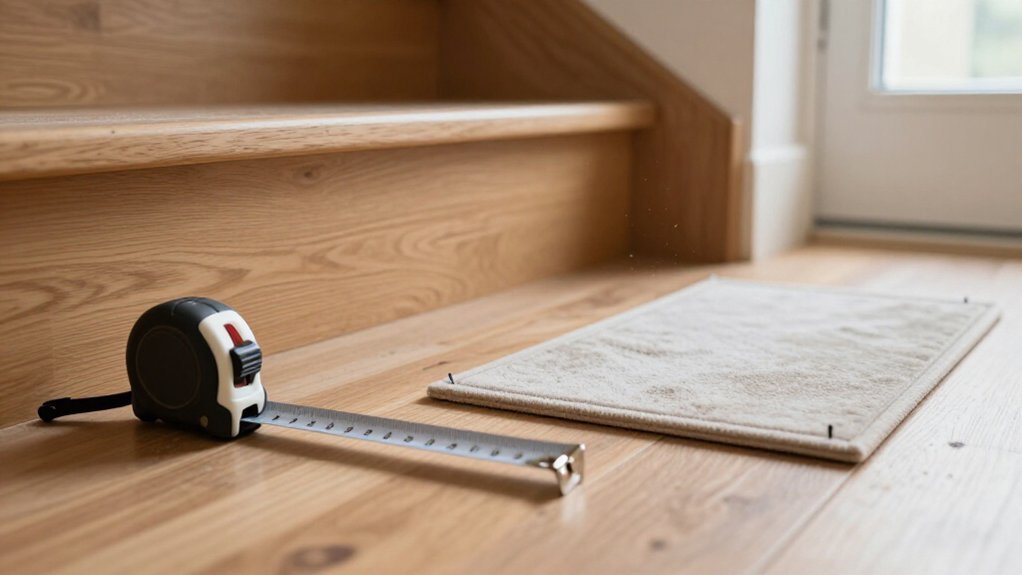
Three essential elements, precise measurement, clear marking, and secure adhesion, transform your bare treads into a stable foundation that prevents slipping and extends your runner’s lifespan by up to 40 percent. You’ll start your tread prep by sanding unfinished hardwood with 120-grit sandpaper, creating a clean, receptive surface that maximizes adhesive contact. For each stair tread, measure your rug pad so it runs narrower than your stair runner by at least one inch per side, then cut individual strips to approximately 8 inches deep when your tread depth measures around 9.5 inches, maintaining proper coverage without overhang. Mark the middle of every riser with a pencil, align each pad’s center to these marks for consistent pad alignment, and install using three-piece tape placements across the middle and edges, securing the rug pad firmly before proceeding.
Recommended Products
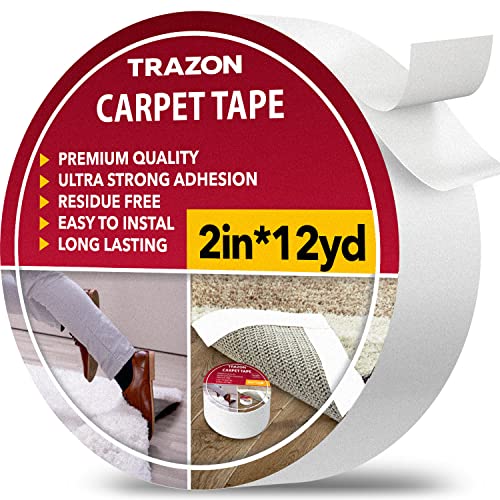
Hot Melt Technology for Extra Sticking Power. Get a rug holder that will finally do its job! Our hot melt double stick carpet tape is highly adhesive compared to acrylic tapes. It offers an outstanding holding power to fix your rugs, runners, carpets, or other stuff you want to keep in its place. Because of increased tensile strength, our two sided carpet tape will be doing its sticky job for 6 months and more.

ULTIMATE HOLDING POWER: Experiencing the market-leading adhesion with our Heavy Duty Double Sided Rug Tape! Being designed to firmly secure rugs, carpets, and runners; Being the strongest anti-slip solution available. Easily cut to size for a perfect fit to keep your floors safe and clutter-free.
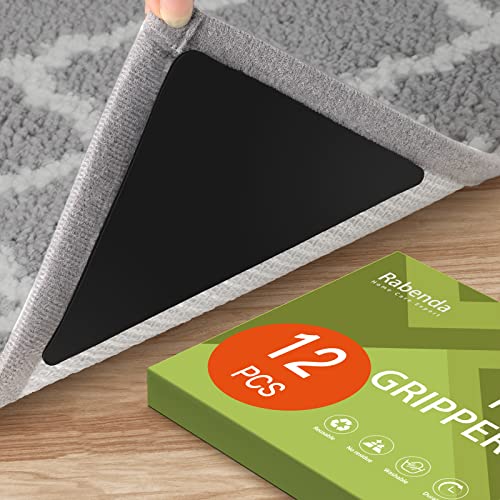
Advantaged Triangle Design: The Triangle Design grippers for area rugs and hardwood floors will maximum increase the contact surface. The strong adhesion will help stick firmly and keep your area rugs in place. Moreover, the rug stickers for wood floors will prevent the rug corners and edges curling and always keep your rugs steady and safe
Staple, Tuck, and Seam the Runner to Each Stair
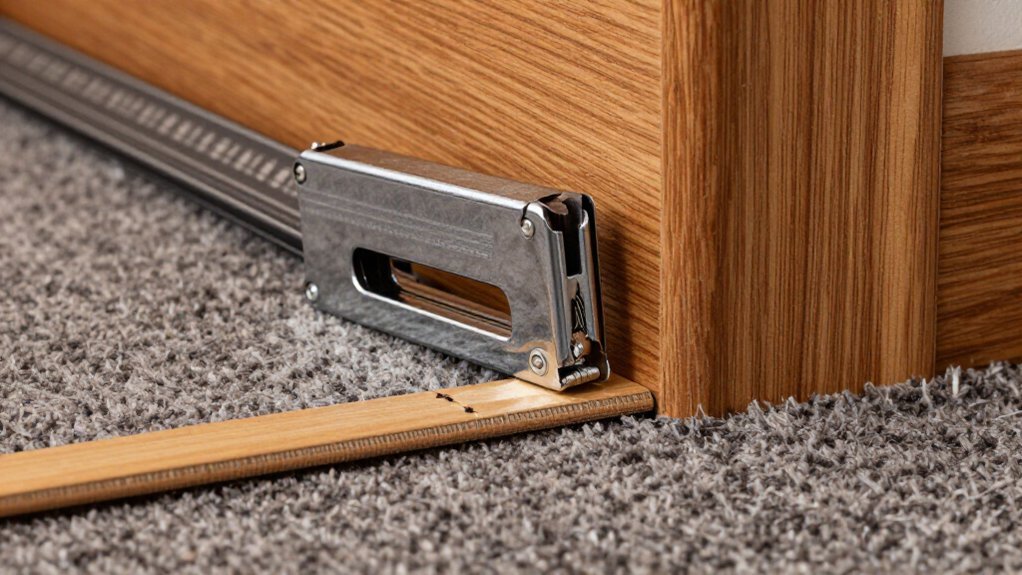
Where exactly do you anchor a runner so it won’t shift under years of foot traffic? You’ll staple your stair runner to the lowest back riser first, then add staples to the top of that riser where it hides beneath the bullnose, maintaining a taut line as you advance to the next riser. You’ll staple every 2–4 inches, beginning with a center staple and moving outward to the sides for proper edge alignment. You’ll use a bolster chisel to tuck the runner firmly against each tread’s back, forming a deep crease that traces your tape guide. For every stair, you’ll staple across in rows while checking left-to-right positioning against the tape guide to stop slippage. At each bullnose, you’ll staple that curved edge first, then spread outward from center for smooth transitions and consistent seams where riser meets tread.
Recommended Products

Easy Installation, Peel and Stick:This cotton and jute bullnose carpet stair treads are extremely easy to install with no need for any tools. Simply clean the stair surface thoroughly, peel off the backing film, align it with the step and press firmly to secure. These bullnose stair treads can be removed cleanly without leaving any residue.

Strong Grip, Ensures Stair Safety – These non-slip stair treads use a self-adhesive design, ideal for wooden steps, creating a stable surface that won’t shift. Perfect for families with kids, seniors, and pets, these stair carpets offer secure footing for every step with confidence.

Premium Polyester Carpet Treads: Crafted from 100% PureColor Soft Solution Dyed BCF Polyester, these treads feature a classic, soft design to enhance the warmth of your home.
