What Is a Drop Ceiling?

false ceiling with suspended panels

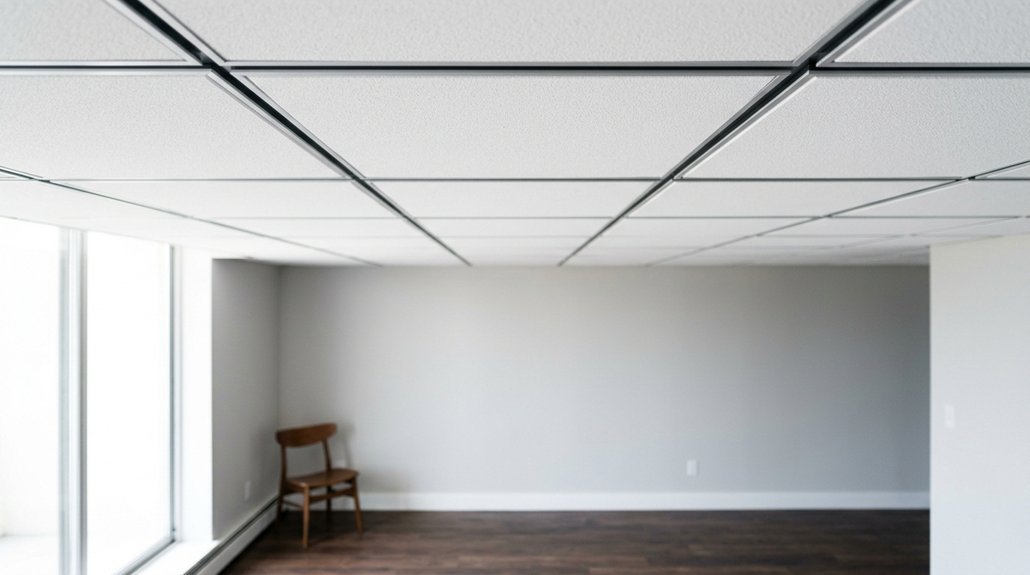
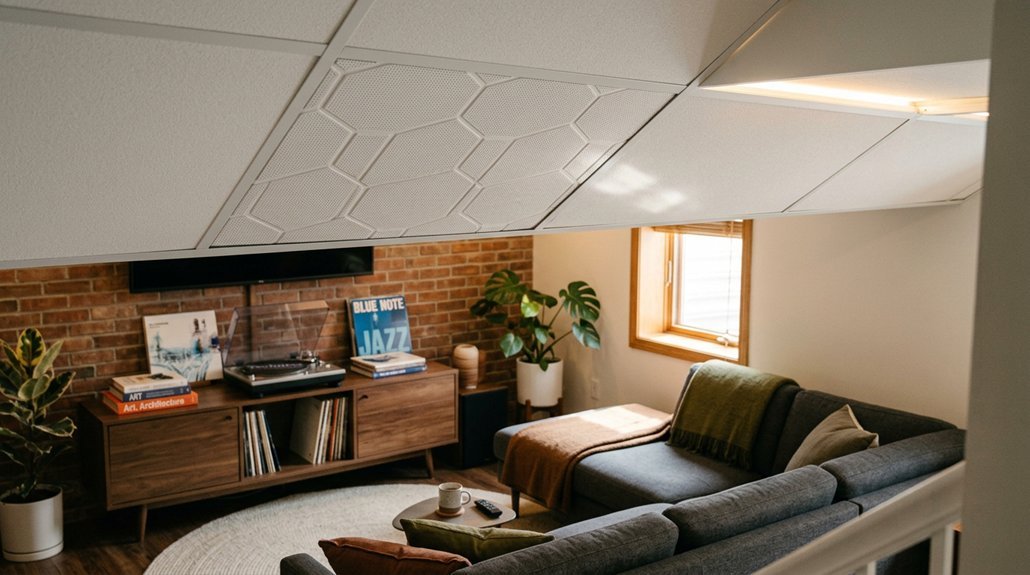
When you’re planning a ceiling renovation, you’ll quickly discover that a drop ceiling, also called a suspended ceiling, offers a practical solution you might not have considered: a lightweight metal grid system, typically measuring 2×2 or 2×4 feet with 15/16-inch or slimline 9/16-inch profile widths, hangs 3 to 8 inches below your structural ceiling on hanger wires spaced every 4 feet, creating a hidden plenum space where insulation, electrical wiring, and HVAC ducts can run while removable tiles, manufactured from mineral fiber (which absorbs up to 70% of sound), fiberglass, or PVC, rest securely on cross tees and main runners to provide acoustic control, thermal efficiency with R-values reaching 3.5 per inch, and instant access for maintenance without tools.

You might assume this commercial-grade system belongs only in offices, yet modern residential options, including wood-look laminates and coffered designs, have changed what was once purely functional into something that can compete aesthetically with drywall while solving problems traditional ceilings cannot. The real question isn’t whether drop ceilings work, it’s whether you’re choosing the right grid type, tile material, and installation approach for your specific space, because a 400-square-foot basement project can range from $800 for basic mineral fiber to $3,200 for premium acoustic panels, and that cost difference hinges on decisions you’ll make before purchasing a single component.
What Is a Rug Pad and Why Do You Need One?

rug pad importance and purpose

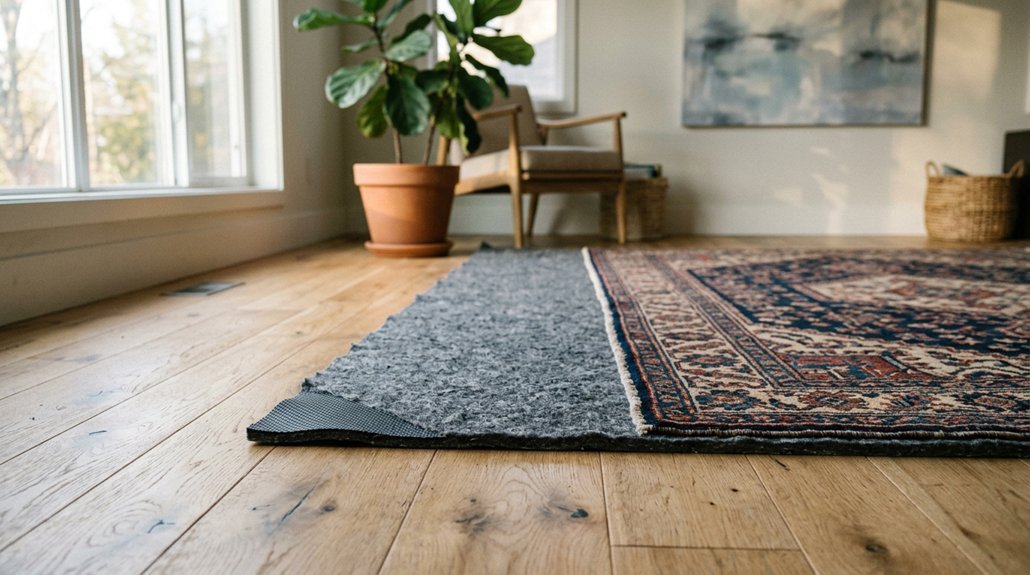
You might think a rug pad is an unnecessary extra purchase, but skipping one exposes your floors to scratches, your household to slips, and your rug to premature wear that shortens its lifespan by up to 40%. A rug pad is a dense underlayment, typically constructed from 100% felt, natural rubber, or a dual-layer composite containing 30% to 50% rubber content with felt backing, that anchors your rug while absorbing the impact of daily foot traffic across dimensions ranging from 2×3 feet for entryways to 9×12 feet or larger for living areas.

The right pad delivers measurable benefits: felt options, usually 1/4-inch to 1/2-inch thick, provide plush cushioning and sound dampening; rubber varieties, often 1/8-inch thick with textured waffle or grid patterns, supply superior grip coefficients on hard surfaces; and hybrid felt-rubber pads combine both properties for high-traffic zones. Your floor type dictates material selection, since natural rubber can discolor certain hardwood finishes while PVC or synthetic latex alternatives work better on vinyl or tile.

The payoff extends beyond immediate comfort, because a quality pad, which typically costs 10% to 20% of your rug’s price, preserves your flooring’s factory finish and prevents the abrasive friction that frays rug fibers from the bottom upward. Here’s what most buyers miss.

hometrendstudio.com
Privacy Overview

This website uses cookies so that we can provide you with the best user experience possible. Cookie information is stored in your browser and performs functions such as recognising you when you return to our website and helping our team to understand which sections of the website you find most interesting and useful.